Shockwave Therapy West London

Effective treatment for tendon, ligament, and soft tissue injuries

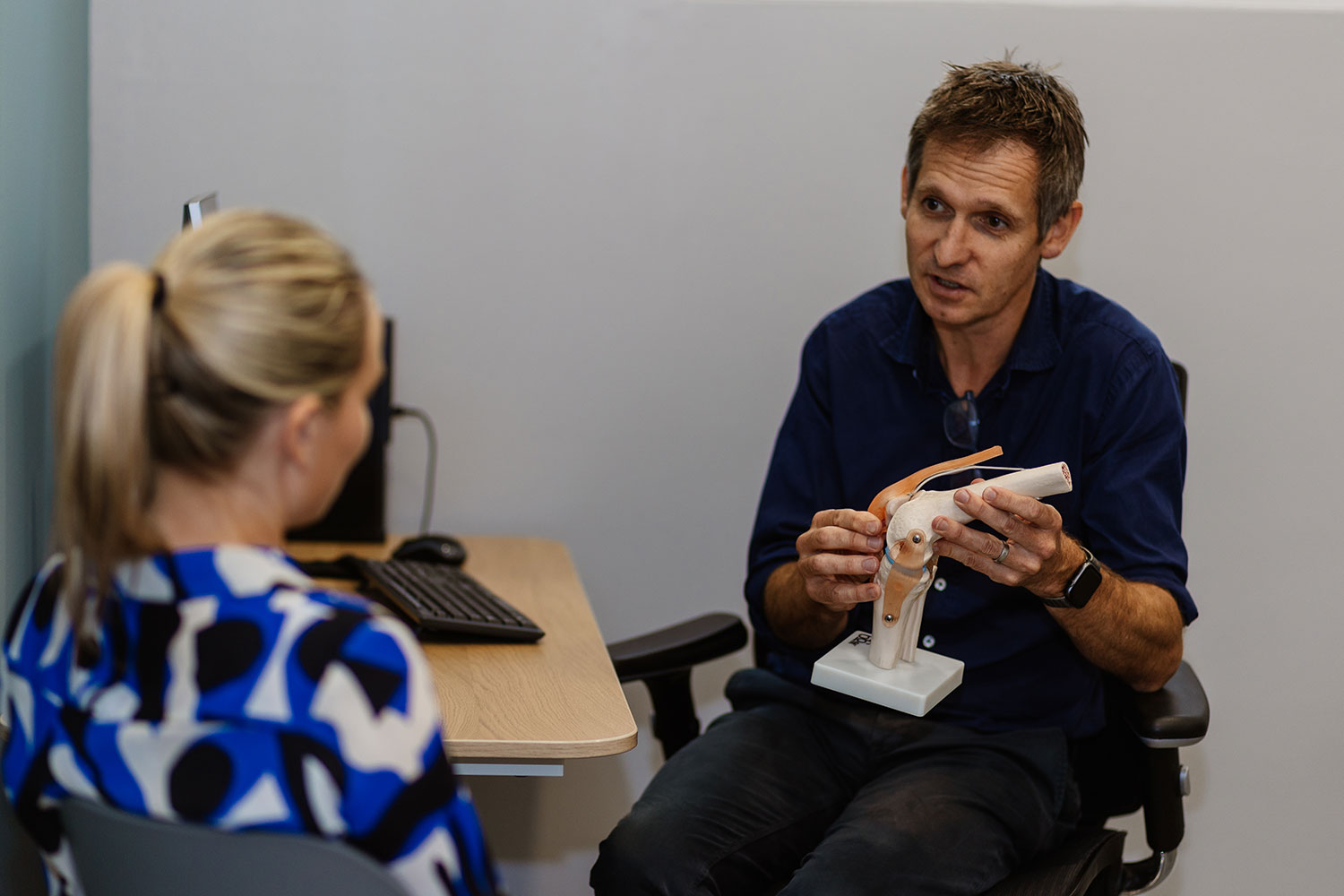
At West London Physio we specialise in treatment using Extracorporeal Shockwave Therapy (ESWT) – a safe, non-invasive treatment designed to help patients with stubborn tendon, ligament, and soft tissue conditions.

Shockwave therapy – either radial or focussed – uses targeted acoustic energy to stimulate the body’s natural healing processes. It has been shown to reduce pain, improve mobility, and accelerate recovery, especially when traditional treatments haven’t provided enough relief.

How Shockwave Therapy Works

  • Stimulates healing: The acoustic waves increase blood flow, cellular activity, and metabolic processes in the injured tissue.

  • Breaks down scar tissue and calcifications: Helping to restore healthy tissue function.

  • Pain relief: Shockwaves influence pain signals in the nervous system, often reducing discomfort quickly.

Most patients begin to notice improvement after just a few sessions, with continued healing and progress over the following weeks.

If you’re struggling with a sports injury or tendon problem that just won’t heal, your body may benefit from extra help. Shockwave therapy can offer such help, jump-starting the body’s ability to regenerate new tissue. It also decreases your pain by directly stimulating your nerves at the site of the injury. Though the name of the treatment makes it sound painful, it’s only mildly uncomfortable for most people.

📞 Call us on 02079371628, email at info@westlondonphysio.co.uk, or  📅 Book Online to arrange your initial consultation at West London Physiotherapy

What Is Extracorporeal Shockwave Therapy?
  • Extracorporeal Shockwave Therapy is a non-invasive treatment that promotes healing and reduces pain in a number of sports and musculoskeletal conditions.
  • Much of the research into shockwave therapy surrounds its use to treat kidney stones – lithotripsy. Today, while over 98% of all kidney stones are treated with this technology, it has become increasingly useful for a wide range of sports and musculoskeletal injuries.
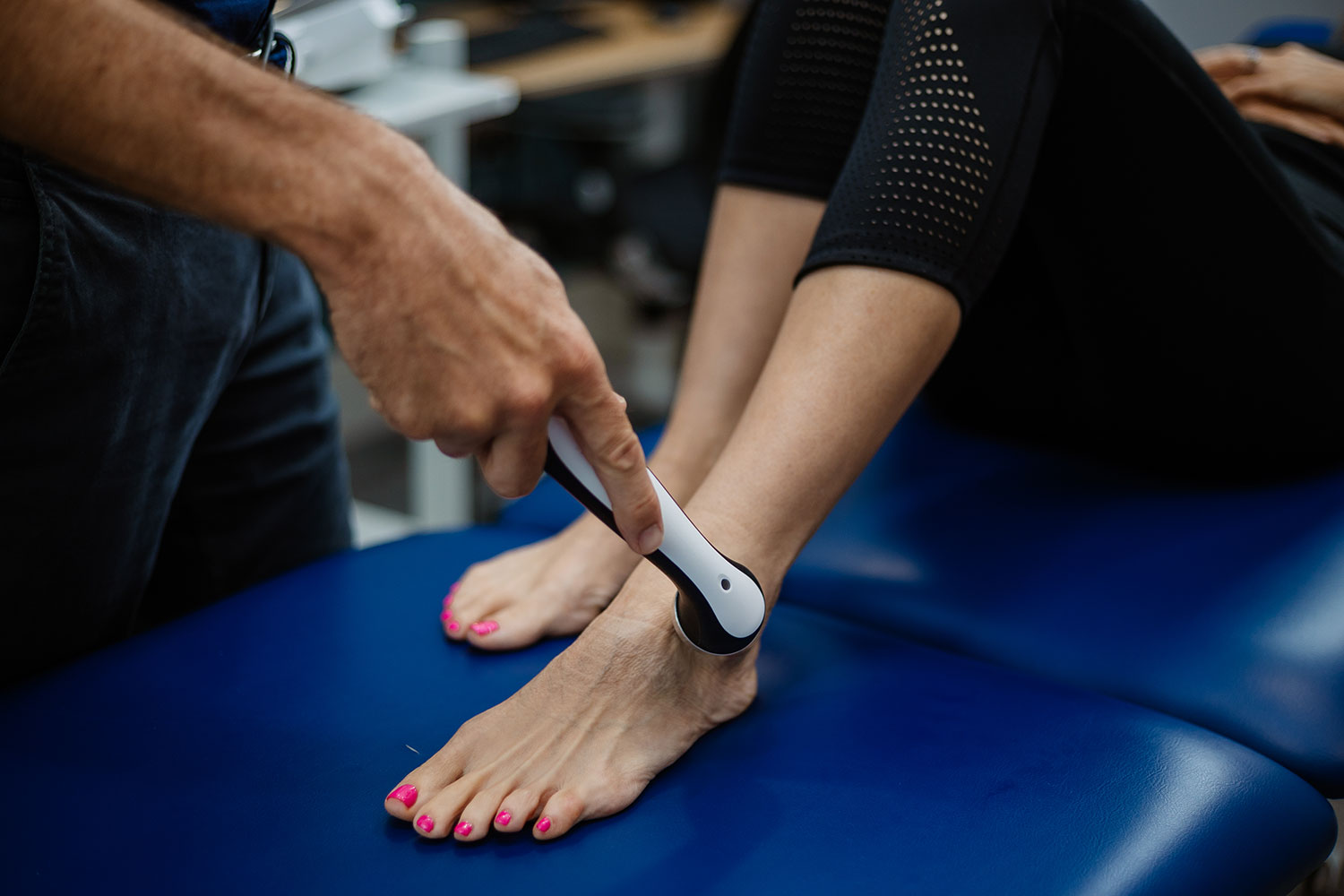
  • It works by delivering high-energy acoustic waves to the affected area, typically via a handheld device. These shockwaves stimulate cellular repair, enhance blood circulation, and help to accelerate the healing process by breaking down scar tissue and calcifications.
  • The energy from the shockwaves can jump-start the body’s natural healing mechanisms, promoting tissue regeneration and reducing inflammation. As a result, patients often experience a significant reduction in pain and improvement in function. Shockwave therapy is particularly effective for chronic tendon issues, such as plantar fasciitis, Achilles tendinitis, and tennis elbow, among others.
What Can Be Treated With Shockwave Therapy?
  • Radial Shockwave therapy can be highly effective for a range of chronic musculoskeletal conditions, including:

    • Plantar Fasciitis (heel or foot pain)

    • Greater Trochanteric Pain Syndrome (lateral hip pain)

    • Gluteus Medius Tendinopathy (hip pain)

    • Achilles Tendinopathy or Tendinitis (heel or calf pain)

    • Patellar Tendinopathy or Tendinitis (anterior knee pain)

    • Rotator Cuff Related Pain (shoulder pain, including supraspinatus and infraspinatus tendinopathy)

    • Calcific Tendinopathy (calcium deposits in tendons, often in the shoulder)

    • Hamstring Tendinopathy (back of the thigh or buttock pain)

    • Lateral Epicondylitis (Tennis Elbow)

    • Medial Epicondylitis (Golfer’s Elbow)

    If you’re struggling with persistent pain in any of these areas, shockwave therapy may help you get back to the activities you enjoy.

What Should I Expect During Treatment?
  • Sessions usually last 15–20 minutes.

  • The shockwave device is applied directly to the affected area using a handheld applicator.

  • You may feel some discomfort during treatment, but it is generally well-tolerated and short-lived.

  • No anaesthesia or injections are required.

  • You can usually return to normal activities immediately afterwards (although high-impact exercise may be temporarily restricted).

How Many Sessions Will I Need?
  • A typical course involves 3–6 sessions, spaced about one week apart.

  • Your physiotherapist will design a programme tailored to your condition, often combined with exercise therapy for best results.

Is Shockwave Therapy Painful?

The experience of undergoing shockwave therapy can vary from person to person. Some patients report feeling a mild discomfort or a sensation akin to being “snapped” with a rubber band during the treatment. The level of discomfort may also depend on the specific area being treated and the severity of the condition. Usually, the intensity of the shockwaves can be adjusted to keep the discomfort at a manageable level.

It’s worth noting that any discomfort usually subsides shortly after the treatment session is completed. Most people are able to resume their regular activities almost immediately.

However, it’s essential to discuss your pain tolerance and any concerns you may have with your healthcare provider prior to undergoing the treatment. This enables them to adjust the therapy settings accordingly and ensures that you’re comfortable throughout the process.


How Much Does It Cost?

Each session is £110.

Are There Any Side Effects?

Mild redness, bruising, or soreness in the treated area may occur, but these effects are temporary and usually resolve quickly.

Who Should Not Have Shockwave Therapy?

Shockwave therapy is not recommended for people who are pregnant, have blood clotting disorders, take anticoagulant medication, have active infection or cancer in the treatment area, or have had a steroid injection in the last 6 weeks. Your physiotherapist will assess suitability before starting treatment.

Will My Insurance Cover It?

Coverage varies. Some private insurance policies may reimburse shockwave therapy, while others may not. Please check with your provider.

Do I Need A Referral?

No referral is needed. You can book directly with us on 02079371628, via info@westlondonphysio.co.uk, or online

Our clients say Excellent

Indepentently rated

We use CustomerSure to check that our customers are happy - every time.

Shockwave therapy may be used to:

  • Increase circulation around injured soft tissues
  • Break down calcified deposits (like kidney stones)
  • Stimulate cells that generate new bone tissue and connective tissue
  • Reduce pain by overstimulating nerve endings in the affected area

Benefits of Shockwave Therapy

  • Quickly reduces pain
  • Promotes natural healing
  • Non-invasive and drug-free
  • Improves mobility and function
  • Effective for chronic conditions
  • Minimal downtime
  • High success rate

Alessandro Poletto

Sports & Musculoskeletal Physiotherapist

Liam McCloskey

Sports & Musculoskeletal Physiotherapist

Jacob Roberts

Sports & Musculoskeletal Physiotherapist

David Wynne

Sports & Musculoskeletal Physiotherapist

Locations

`

Kensington SW7

West London Physio is just a short 5 min walk from Gloucester Rd underground (Piccadilly, District and Circle lines) or a 10 min walk from High St Kensington underground (Circle and District lines).

Driving? There is resident parking available for Kensington and Chelsea residents, with meter parking on Queens Gate and Palace Gate, and limited meter parking on Gore St.

Last updated: 26th September 2025